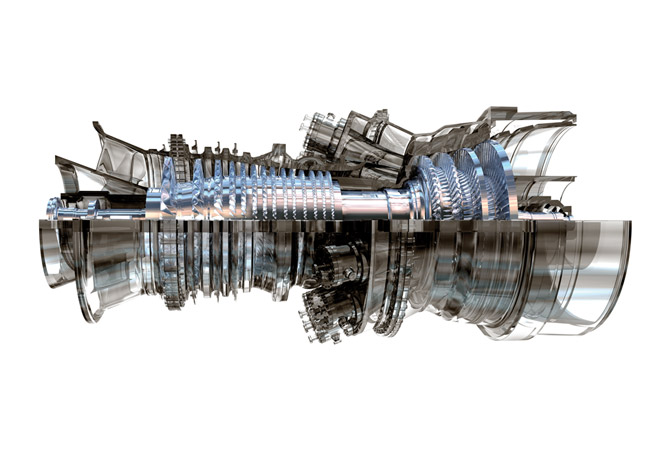
 GE recently announced a line of new natural gas turbine models that offer both increased efficiency and flexibility. Traditionally, “Conventional natural-gas power plants are generally either flexible or efficient. That is, some can quickly increase and decrease power output to meet spikes or lulls in electricity demand, while others are able to hum along steadily without using much natural gas but take hours to bring up to speed,” wrote Kevin Bullis of MIT’s Technology Review.
Power plants need to become more nimble as demand increases, fossil fuel prices continue to fluctuate, and more renewable energy sources are added to the grid. GE explains that their “new FlexEfficiency technologies deliver enhanced capabilities that allow utilities to ramp faster and more often, cycle on/off faster and more often, and provide more short-term reserves with high levels of efficiency.”
Renewable energy sources provide low-emissions power, but are much less predictable or consistent than fossil fuel sources. The efficiency and flexibility of GE’s new natural gas turbines could help utilities balance the supply and demand of electricity as they incorporate more renewable energy sources at a low cost.
Will technology like this increase the competitiveness of renewable energy? What are other examples of markets for technology that is defined by its adaptability and complementarity to green policies and trends, like increased renewable energy sources on the grid?
[…] Posted in America, Economy, Freedom This is a promising idea and technology and could really reduce our dependency on foreign oil, provided cheaper energy prices for both individuals and… Read more »
The technology is nice, but I don’t believe it’s “revolutionary”. It will have some utility for integrating higher levels of renewables into the grid, but I don’t think it’s the… Read more »