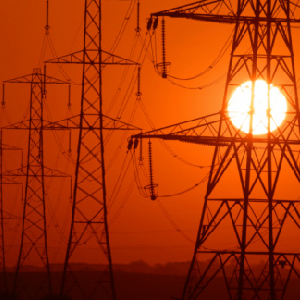
Numerous studies by accredited groups, such as the Congressional Electromagnetic Pulse Commission, the National Academy of Sciences, the Oak Ridge National Laboratory, have concluded that solar storms and resulting geomagnetic disturbance are a critical threat to the reliability of electric grids. The recent report from the U.S. National Intelligence Council, “Global Trends 2030: Alternative Worlds,” presented solar geomagnetic storms as one of eight “black swan” events that could change the future course of human history.
Solar storms effecting power grids are not merely a hypothetical scenario. A moderate solar storm hit Quebec, Canada in March 1989, causing a province-wide blackout. Despite the widespread damage, in the twenty-three intervening years, the electric utility industry has not established reliability standards to protect against solar storms.
The Federal Energy Regulatory Commission (FERC) recently published a Notice of Proposed Rulemaking (NOPR), referred to as FERC Docket RM12-22, which would require a reliability standard to address the impact of geomagnetic disturbances (GMD) on the reliable operation of the Bulk-Power System.
What’s your take on the FERC’s recently released NOPR? What should a reliability standard for solar storms look like?
The FERC is currently accepting comments on the NOPR until December 24th, 2012, so be sure to post your comments below soon. A non-technical summary outlining the need for protection against solar storms can be found here. Other detailed background material for policymakers can be found by searching under the previous FERC Docket “AD12-13.”


Due to the nature of our infrastructure, most of the protection and controling is done remotely over telecommunication circuits both TDM and IP based. This being the case it would appear that the FCC should be a large part of this action. Because you can have the best protectioin possible at the infrastructure site , but if you can not get to it for monitoring and control during a GMD event. You protectioin is not as effective. I would ask that the FCC be asked to help develope this document.
Protection of long-lead time items such as transformers and generators will certainly take front stage in this discussion since the time to replace these elements are measured in years and not days. However, the role of SCADA and other control networks play a huge role, not only because of the role they are used to manage power networks, but, how they can be used to cause much more severe damage to the long-lead time items they are designed to control and protect when these control elements are disrupted or damaged by natural or man-made electromagnetic pulse (EMP) and cyber attack.
Furthermore, it is well known in the literature that the cascading effects of a failed power grid can have totally disruptive effects to all communications systems, including emergency communications systems that are dependent on power grids. Once these outages continue for weeks, back-up systems and their fuel supplies begin to break down.
The FCC has already been struggling with the communications industry who has been arguing that wireless or Internet systems should not be compelled to meet the same reliability standards as the traditional land line systems of phone companies. But, in the case of months long regional, national or continental power failures, all the communications systems that the FCC regulates would be in peril along with the emergency communications systems and programs that they either regulate or influence.
So, to Jimmy’s comment about the FCC, the FCC certainly should take a strong interest, if for no other reason that they and their regulated entities are key customers and stakeholders of the power industry. But, it should not be overlooked that the communications industry is a key provider to the power industry without which it would be difficult to manage the power industry and nearly impossible to restore it.
Furthermore, a fresh look at these interdependencies in light of our over-dependence on centralized systems might not only call for greater protection of the electric power system (the purpose of this FERC proposed rule), but, a renewed focus on the role of locally generated and stored power.
The NRC decided long term grid outage is likely enough to justify ruling on GMD threats to the grid: On December 18, the Federal Register reported the Nuclear Regulatory Commission (NRC) decision that the risk of long-term grid outage due to GMD is so high, that they are beginning their own multi-phase rule making on the issue, thus joining the FERC on taking steps to consider the threat and required mitigation. See the Federal Register location for their decision about a petition to rule on the safety of nuclear power plant spent fuel facilities in the event of a long-term grid power outage: Federal Register/Vol. 77, No. 243/Tuesday, December 18, 2012/Proposed Rules pp. 74788-74797. The bottom line is that the NRC is initiating a phased rule making process that will also take in lessons still being learned from the Fukushima nuclear disaster.
The Fukushima disaster and related high-impact threats such as geomagnetic storm threats were recently covered at the Dec. 7, 2012 Dupont Summit whose complete video coverage will soon be available at http://www.livestream.com/policystudiesorganization?t=546747 . The live video of the first three hours of the conference is already posted and includes a presentation from Mr. Yuki Karakawa, Chairman of the Japan Resilience Task Force, Mr. Tom Popik who submitted the petition to the NRC and Mr. John Kappenman who provided much of the testimony considered in the ruling.
The conclusion of the NRC appears to be the following. Utility industry representatives and space weather experts agree that geomagnetic storms can impact the grids. However, some within industry opine (with little data) that the likelihood is lower and the resulting damage is less than others who hold more pessimistic views who have been working with data and models that suggest that the damage may be more severe and longer lasting. The NRC says that the nature of the nuclear industry is such that the NRC must manage risks of even more unlikely events than the most optimistic opinions about geomagnetic disturbances (GMD). So, long term grid outages from low probability events such as GMD must be considered since scenarios could arise where fuel may not be available in time to refuel back-up generators to maintain cooling of spent fuel rods. Failure to cool those rods could lead to nuclear disasters such as what was experienced at Fukushima. This comes at a time when manmade electromagnetic pulse, coordinated physical attacks and cyber attacks may cause similar damage. Concerns about these threats are growing and solutions to mitigate these combination of threats would be timely. The NRC decision also seems to follow the results of the low, medium and high impact scenarios considered by the National Defense University in October 3-6, 2011 where any of the scenarios present risks that have not been sufficiently considered by contingency and disaster recovery planners.
The conclusion of the NRC report is quoted below for the convenience of those considering the issues:
“Recent experience and associated analyses regarding space weather events suggest a potentially adverse outcome for today’s infrastructure if a historically large geomagnetic storm should recur. The industry and the FERC are considering whether EHV transformers that are critical for stable grid operation should be hardened to protect them from potential GIC damage and whether existing procedures for coping with a GIC event require significant improvements. …. In addition, the near-term actions (including a revised station blackout rulemaking (RIN 3150–AJ08, NRC–2011–0299) currently underway in response to the event at the Fukushima Dai-ichi nuclear power plant on March 11, 2011, are expected to include deployment of resources from remote locations to cope with loss of offsite and onsite power for an extended duration. However, in the event of a widespread electrical transmission system blackout for an extended duration (beyond 7 days and up to several months), it may not be possible to transport these and other necessary offsite resources to the affected NPPs in a timely manner. Thus, government assistance (local, state, or Federal) may be necessary to maintain the capability to safely shutdown nuclear plants and cool spent fuel pools in the affected areas. Prior planning is needed to efficiently and effectively use government resources to ensure protection of public health and safety. Current NRC regulations do not require power reactor licensees to undertake mitigating efforts for prolonged grid failure scenarios that could be caused by GICs resulting from an extreme solar storm. Thus, the NRC concludes that the issues and concerns raised by the petitioner need to be further evaluated.”
“To that end, the NRC will consider the issues raised in the petition in the NRC rulemaking process. The NRC will initiate the rulemaking process for development of a regulatory basis in a phased approach.”
Attached is the email I sent to the FERC contacts with my response for the Reliability Standards for Geomagnetic Disturbances Docket No. RM12-22-000, Geomagnetic Storm Proposed Rulemaking. Unfortunately, I was unable to log my response formally with FERC. I am posting it here to help encourage discussion.
Dear David and Matthew,
I apologize for not being able to get my comment in before Christmas Eve, but I am a FEMA Reservist and have been unavoidably delayed with a deployment supporting Hurricane Sandy recovery. I failed numerous attempts to PDF Electronic Filing through http://www.ferc.gov
Thank you for all you do for America and the National Electric Grid.
Merry Christmas,
+Roger Fraumann
———————-
12/24/1012
To the UNITED STATES OF AMERICA FEDERAL ENERGY REGULATORY COMMISSION
Dear Sirs,
Thank you for the opportunity to file a response for the Reliability Standards for Geomagnetic Disturbances Docket No. RM12-22-000, Geomagnetic Storm Proposed Rulemaking.
After reading the docket, may I suggest that a different approach may be necessary to adequately address the issues towards assuring the safety, security and survival of the National Electric Grid. While this docket attempts to address the threat through the lens of geomagnetic disturbance, it fails to require logical first steps in defining the risk.
It seems the FERC may be wise to task NERC to conduct a comprehensive risk assessment using NIST and FIPS to not only address geomagnetic disturbance, but also for cyber threats and electro-magnetic pulse threats using consistent regulations, tools and processes. How and why would FERC require anything other than the full compliance of the Standards, Procedures and Processes provided by NIST and FIPS?
Starting with NIST SP800-53 and FIPS 200, the level of impact on grid operations (including mission, functions, image, and reputation), grid and agency assets, and addressing various vectors with consistent tools can let us better assess the potential impact of threats occurring. Since the information processing system governing the National Electric Grid is at risk of geomagnetic disturbance, it seems prudent to consistently utilize the regulations and tools for cyber to address the rest of the issues as well.
If this is the case, then it seems next steps for NERC might include:
1) Identifying and cataloging assets to protect;
2) Conduct the risk assessment (NIST SP800-27A and others);
3) Document and implementation a risk mitigation strategy (NIST SP800-30 and others); and then
4) Employ processes, techniques and procedures for the continuous monitoring of the information system.
To this end, a good start will be for the FERC to produce a meaningful taxonomy for the NERC to gather and maintain a list of all high-tension transformers which comprise the National Electric Grid. It seems part of the taxonomy should include such variables as age, design, and length/direction of long distribution lines connecting to the transformers.
Sincerely,
Roger Fraumann CISSP
rlf@fraumann.com
+1-858-699-3258 Ce
18515 Caminito Pasadero #338
San Diego, CA 92128 USA
LinkedIn: http://www.linkedin.com/in/rogerfraumann
It is encouraging that both the NRC and FERC have taken positions that geomagnetic disturbance is a serious issue for grid reliability that needs further regulatory consideration. However, some electric utilities are dubious that there networks could be affected; one reason could be complicated prospects for cost recovery under the current regulatory scheme, Section 215 of the Federal Power Act. When cost-effective electric reliability enhancements are feasible, this should be part of the consideration process, as it is for nuclear safety improvements.