The OurEnergyLibrary aggregates and indexes publicly available fact sheets, journal articles, reports, studies, and other publications on U.S. energy topics. It is updated every week to include the most recent energy resources from academia, government, industry, non-profits, think tanks, and trade associations. Suggest a resource by emailing us at info@ourenergypolicy.org.
Resource Library
Search Results for "infrastructure"
101 to 110 of 1078 item(s) were returned.
101 to 110 of 1078 item(s) were returned.
Author(s): U.S. Chamber of Commerce Global Energy Institute
Publisher: U.S. Chamber of Commerce Global Energy Institute
Publication Date: December 1, 2018
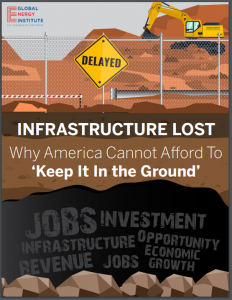
In recent years, anti-energy groups have rallied around a singular theme: “Keep it in the Ground.” Environmental
activists argue that many of our most reliable energy sources – coal, natural gas, and oil – should not be accessed at all, and instead be left deep underground. In support of this agenda, they are actively fighting against as many energy infrastructure and development projects as they can – pipelines and transportation networks, power plants and transmission lines, export facilities, and much more.
This campaign has significant costs: Power plants that are cancelled mean fewer job opportunities for blue collar
workers and …
Author(s): Abdulkadir Bedir, Noel Crisostomo, Jennifer Allen, Eric Wood, and Clément Rames
Publisher: California Energy Commission
Publication Date: March 1, 2018
This report analyzes plug-in electric vehicle (PEV) infrastructure needs in California from 2017 to 2025 in a scenario where the state’s zero-emission vehicle (ZEV) deployment goals are achieved by light-duty vehicles, primarily in residential use. The statewide infrastructure needs are evaluated by using the Electric Vehicle Infrastructure Projection tool, which incorporates representative statewide travel data from the 2010-2012 California Household Travel Survey.
The infrastructure solution presented in this assessment addresses two primary objectives: (1) enabling travel for battery-electric vehicles and (2) maximizing the electric vehicle-miles traveled for plug-in hybrid-electric vehicles. The analysis is performed at the county level for each …
View Full Resource
Author(s): Matteo Muratori, Clement L Rames, Sesha Raghavan Srinivasa, Marc W Melaina, and Eric W
Publisher: National Renewable Energy Laboratory (NREL)
Publication Date: February 1, 2018
This presentation describes a study conducted by the National Renewable Energy Laboratory quantifying the charging station infrastructure required to serve the growing U.S. fleet of plug-in electric vehicles (PEVs). PEV sales, which include plug-in hybrid electric vehicles (PHEVs) and battery electric vehicles (BEVs), have surged recently. Most PEV charging occurs at home, but widespread PEV adoption will require the development of a national network of non-residential charging stations. Installation of these stations strategically would maximize the economic viability of early stations while enabling efficient network growth as the PEV market matures. This document describes what effective co-evolution of the PEV …
View Full Resource
Author(s):
Publisher: Center for Climate and Energy Solutions
Publication Date: January 1, 2018
A new federal infrastructure package presents a critical opportunity to strengthen America’s infrastructure against the growing risks posed by extreme weather and other impacts of climate change. Enhancing the climate resilience of the nation’s infrastructure can substantially reduce future losses, benefiting public health, safety, quality of life, and prosperity. This policy brief outlines the benefits of climate-resilient infrastructure and criteria that should inform infrastructure planning and investment to enhance climate resilience. It identifies the types of infrastructure projects that can promote resilience while simultaneously achieving other climate and energy goals and recommends changes to existing federal policies and programs to …
View Full Resource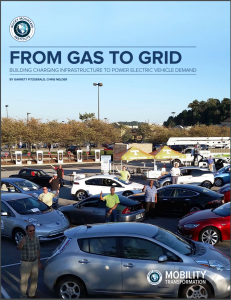
Author(s): Garrett Fitzgerald, Chris Nelder
Publisher: Rocky Mountain Institute
Publication Date: October 1, 2017
The world doesn’t need any more cost-benefit analyses; they’ve already been done, and they show that vehicle electrification is overwhelmingly beneficial for society as a whole—even for non-drivers. Nor should we doubt that people will buy electric vehicles (EVs). Sales are accelerating so rapidly that Bloomberg New Energy Finance warns the U.S. will hit an “infrastructure cap” in the mid-2030s due to a lack of charging stations. The questions we should be grappling with now is where to build EV chargers, who should own them, and how to make fast charging a sustainable business.…
View Full Resource
Author(s):
Publisher: International Renewable Energy Agency
Publication Date: September 1, 2017
As solar photovoltaic (PV) power systems become increasingly competitive, continued market growth depends on assurances of performance and durability. Quality assurance protects and accelerates future PV investments, lowers capital costs, improves performance, extends module lifespans and lowers the resulting electricity costs.
From less than 10 gigawatts (GW) worldwide in 2006, installed solar PV capacity reached nearly 300 GW in 2016. More than 71 GW was added in 2016, with over USD 113 billion invested in solar energy technologies.
However, comprehensive quality assurance requires physical and institutional infrastructure. This so-called, Quality Infrastructure (QI), comprises the total institutional network and legal framework …
View Full Resource
Author(s): Richard J. Campbell
Publisher: Congressional Research Service
Publication Date: September 1, 2017
This Insight discusses the measures undertaken by electric utilities to prevent or mitigate power outages resulting from severe weather events. Power lines and transformers used to provide electricity to customers are particularly susceptible to damage due to their exposure to the elements. (See CRS Report R42696, Weather-Related Power Outages and Electric System Resiliency.) The loss of life and extensive damage seen so far in the 2017 hurricane season has refocused the attention of Congress on the destructive potential of such storms. High winds, rain, and coastal surges can combine to create floods which exacerbate damage from hurricanes. Other severe weather …
View Full Resource
Author(s): Farrah Andersen, Christina Becker-Birck, Liz Hanson, Sasha Shyduroff, Will Sloan, Kathryn Wright, Dakota Gangi, Namrita Kapur, and Amy Morse
Publisher: Environmental Defense Fund
Publication Date: September 1, 2017
This report introduces a framework to mobilize private finance for sustainable infrastructure projects. The framework’s focus includes: identifying suitable funding models, establishing performance measurement, managing diverse risks, and facilitating effective stakeholder engagement. The report’s findings are drawn from a comprehensive review of best practices and in-depth interviews with experts and thought leaders involved in the deployment, financing and market development of sustainable infrastructure. Interview participants included representatives from the public, private and non-profit sectors and experts in complementary fields including social impact investing, renewable energy, and community-development finance…
View Full Resource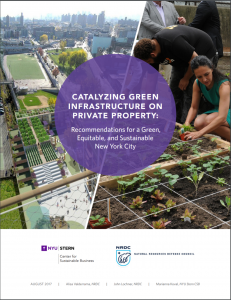
Author(s): Alisa Valderrama, John Lochner, Marianna Koval
Publisher: Natural Resources Defense Council & New York University
Publication Date: August 1, 2017
A little more than 25 years ago, New York City faced a formidable challenge. To protect the drinking water of the eight million people who lived and worked in the Big Apple, it confronted construction costs of nearly $10 billion and operating costs of $365 million annually for a new system that would filter the 1.1 billion gallons of water that New Yorkers used every day. But instead of using a more traditional approach involving concrete and pipes—what’s often called “gray infrastructure”—it did something transformational. The City created an extraordinary partnership among government agencies, nonprofit organizations, and watershed farms and …
View Full Resource
Author(s): Michael Goggin
Publisher: American Wind Energy Association
Publication Date: August 1, 2017
The U.S. Department of Energy’s (DOE) new report on the U.S. electric grid makes valuable recommendations for expanding access to reliable, low-cost electricity by streamlining approval of electric transmission infrastructure and using markets to procure essential reliability services. As a low-cost source of energy that can provide reliability services as well as or better than conventional power plants, wind energy will flourish with the expansion of markets and infrastructure…
View Full Resource
Disclaimer: OurEnergyPolicy.org makes no claim as to the accuracy or quality of Resources produced by third parties.