The OurEnergyLibrary aggregates and indexes publicly available fact sheets, journal articles, reports, studies, and other publications on U.S. energy topics. It is updated every week to include the most recent energy resources from academia, government, industry, non-profits, think tanks, and trade associations. Suggest a resource by emailing us at info@ourenergypolicy.org.
Resource Library
Search Results for "infrastructure"
1 to 10 of 1079 item(s) were returned.
1 to 10 of 1079 item(s) were returned.

Author(s): Lewis (Zhaoyu) Wu, Abraham Silverman, Harrison Fell, and James Glynn
Publisher: Center on Global Energy Policy at Columbia University SIPA
Publication Date: April 5, 2024
Upgrading the US electric grid is vital to a successful energy transition. Transmission expansion lowers electricity costs for consumers; speeds deployment of new generation resources; provides economic opportunities for communities; increases system reliability, particularly in the face of extreme weather events; and enables large-scale transfers of power from areas of the country with high renewable energy potential to customers. But experience over the past twenty years has shown that new transmission projects often face extensive delays, impeding or even denying these potential benefits to consumers and communities. In response, policymakers at the state and federal level are considering reforms to …
View Full Resource
Author(s): Roland Berger
Publisher: Clean Freight Coalition
Publication Date: March 19, 2024
Numerous new pressures are being placed on the trucking industry. States and the federal government are examining regulations to quickly transition the industry by 2040 to full electrification with the goal to reduce commercial vehicle carbon emissions. The Clean Freight Coalition contracted a study with Roland Berger to determine the added costs to the freight industry and utilities if commercial vehicles reach 100% electrification. This study examined two scenarios- one with current vehicle and charging technology offerings, and the other with modest improvement in both vehicles and chargers- to determine the realistic electricity infrastructure buildout scenario for medium- and heavy-duty …
View Full Resource
Author(s): Better Buildings
Publisher: Better Buildings
Publication Date: March 5, 2024
In 2019, Marriott International (Marriott) launched the Marriott Infrastructure Resilience and Adaptation (MIRA) program to evaluate climate-related risks across its global portfolio of nearly 8,600 properties spanning 139 countries and territories. Through this comprehensive program, Marriott identified current and future climate risks to its portfolio and has a strategy in place to manage potential impacts, improve resiliency and mitigate losses to stakeholders.…
View Full Resource
Author(s): Jeannette Wicks-Lim and Robert Pollin
Publisher: Political Economic Research Institute at the University of Massachusetts Amherst
Publication Date: February 5, 2024
Between November 2021 and August 2022, three major economic policy laws were enacted by the U.S. Congress and signed into law by President Biden. These three laws are the BIL (Bipartisan Infrastructure Law), the IRA (Inflation Reduction Act) and the CHIPS (Creating Helpful Incentives to Produce Semiconductors) Act. In combination, the purpose of these three measures is to support a large-scale expansion of investments in the U.S. in the areas of clean energy, manufacturing, and infrastructure.
This report considers the BIL, the IRA, and the CHIPS Act with respect to their employment impacts within the U.S. economy. This report is …
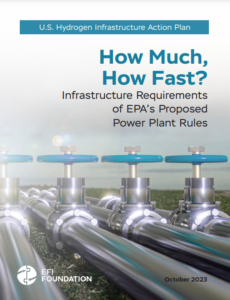
Author(s): EFI Foundation
Publisher: EFI Foundation
Publication Date: October 20, 2023
This report focuses on the infrastructure needs of the U.S. Environmental Protection Agency’s (EPA’s) proposed rules for fossil-fueled power plant emissions reductions. This modeling-driven study analyzes the potential outcomes of EPA’s proposal on the energy system by region, including the costs of the potential electricity, hydrogen, and carbon dioxide (CO2) infrastructure requirements.
The report is the first in a new report series called the U.S. Hydrogen Infrastructure Action Plan, which analyzes the opportunities of hydrogen infrastructure for enabling market formation. This series is a follow-up to the February 2023 Energy Futures Initiative (EFI) report, The U.S. Hydrogen Demand Action Plan, …
View Full Resource
Author(s): Thomas Covert and Ryan Kellogg
Publisher: Energy Policy Institute at the University of Chicago
Publication Date: October 17, 2023
“We study policies that aim to ‘keep carbon in the ground’ by blocking fossil fuel infrastructure investment. Our analysis relies on a model of hydrocarbon production and transportation, incorporating substitution between pipeline infrastructure and flexible alternatives, like crude-byrail. We apply the model to the Dakota Access Pipeline (DAPL), which moves oil from North Dakota to Texas and was controversially completed in 2017. Had DAPL’s construction been enjoined, we estimate that 81% of the blocked pipeline flows would move by rail instead. This substitution induces both private costs and local environmental damage, since rail transport imposes greater local externalities than pipelines.”…
View Full Resource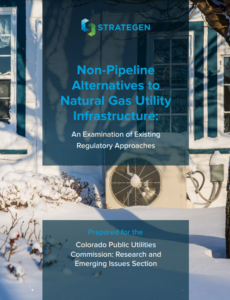
Author(s): Ron Nelson, Bradley Cebulko, Thomas Van Hentenryck, Vassilisa Rubtsova, Thanh Nguyen, and Natalie Mims Frick
Publisher: Stratagen
Publication Date: September 30, 2023
The primary audience of this paper is public utility commissions (PUCs) that are considering the role of NonPipeline Alternatives (NPAs) in gas utility planning. The purpose of this paper is to examine the existin proceedings, rules, and studies that are currently or have been under consideration to inform PUCs as they consider developing their own NPA frameworks. This is the first of two papers on the topic of non-pipeline alternatives. The second will address best practices in the construction of an NPA framework.…
View Full Resource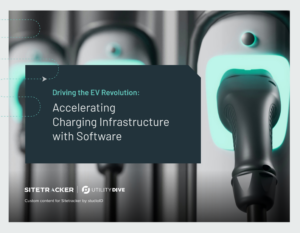
Author(s): Site Tracker
Publisher: Utility Dive
Publication Date: September 12, 2023
A record number of EVs were sold in the U.S. in the first half of 2023 – and forecasters believe one million EVs will be purchased in America for the first time this year.
While it’s good news for the climate and drivers’ pocketbook, there is just not enough public chargers being built. According to S&P Global Mobility, the U.S. currently has about 140,000 EV chargers but needs to build another 420,000 by 2025 and about one million by 2030. Building a robust nationwide network of chargers in a few years means working fast and efficiently.…
View Full Resource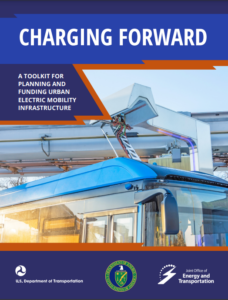
Author(s): Department of Transportation
Publisher: Department of Transportation
Publication Date: July 28, 2023
The Urban Electric Mobility Toolkit serves as a one-stop resource to help urban communities scope, plan, and identify ways to fund electric vehicle (EV) charging infrastructure, supporting diverse forms of electric mobility including travel by personal vehicle, transit, micromobility (e.g., electric bicycles and scooters), and ride-sharing services. Urban communities, metropolitan planning organizations (MPOs), transportation providers, businesses, and property owners and developers can use the toolkit to identify key partners for an electric charging project, take advantage of relevant planning tools, and identify available funding or financing to help make that project a reality…
View Full Resource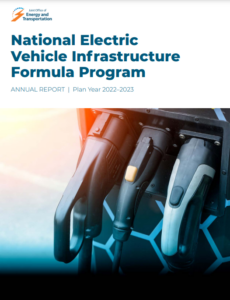
Author(s): Jean Chu, Bridget Gilmore, Joshua Hassol, Alan Jenn, Steve Lommele, Lissa Myers, Heather Richardson, Alex Schroeder, and Monisha Shah
Publisher: US Joint Office of Energy and Transportation
Publication Date: July 24, 2023
The U.S. transportation sector accounts for one-third of the nation’s greenhouse gas emissions—the largest share of all primary sectors, including electricity production, industry, commercial and residential, and agriculture. Electrified transportation has significant potential to reduce U.S. greenhouse gas emissions and help tackle the climate crisis.
Electrifying our transportation sector requires bold action to ensure the necessary infrastructure is in place for Americans to be able to ride and drive electric. According to a recent study from the National Renewable Energy Laboratory, 1.2 million public
charging stations will be needed to support 33 million light-duty vehicles by 2030. The Infrastructure Investment …
Disclaimer: OurEnergyPolicy.org makes no claim as to the accuracy or quality of Resources produced by third parties.